
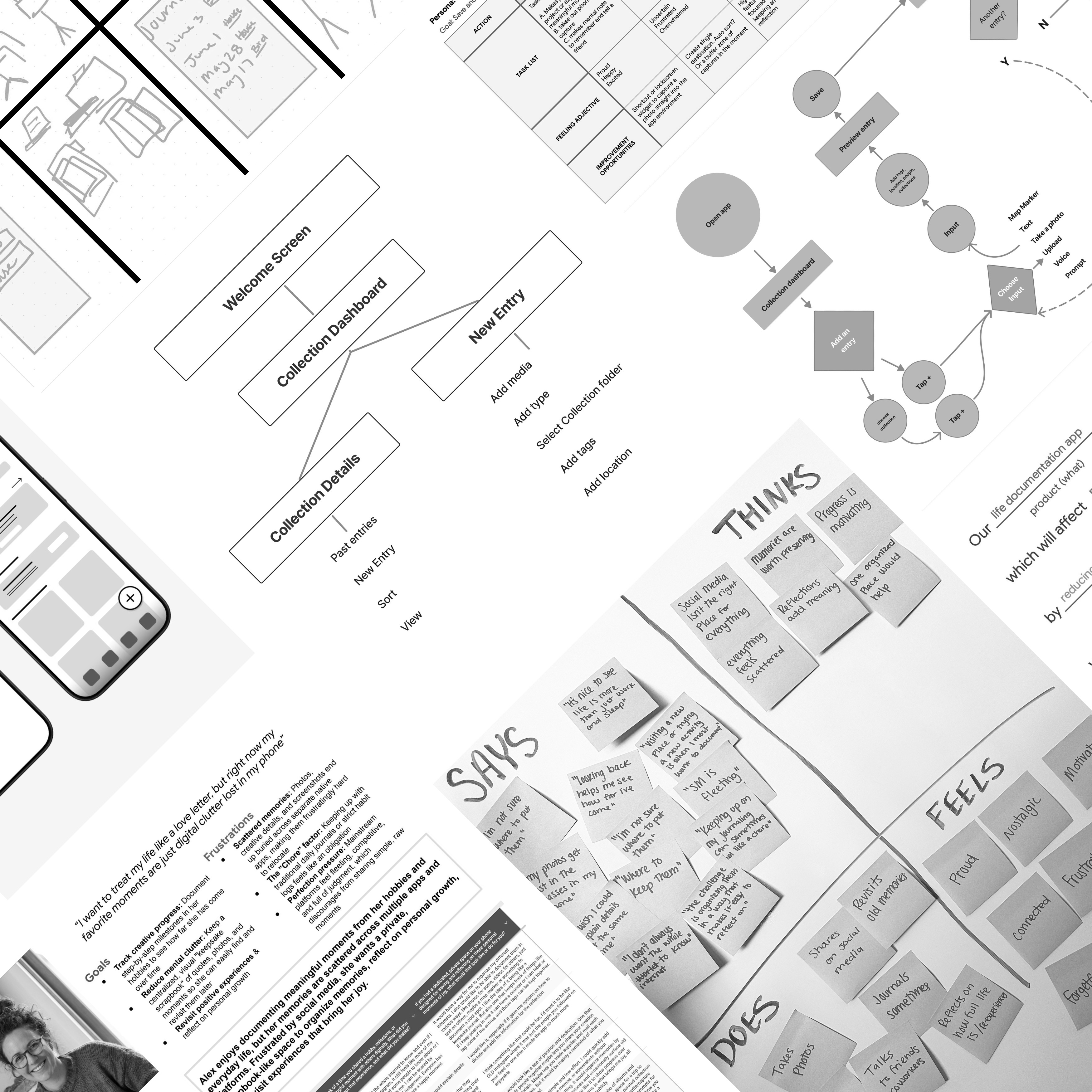
Ripple
Making hobby documentation more meaningful. Concept project.
Project Overview
Project BriefDesign a mobile app that helps people document, organize, and revisit their hobbies.
Timeline
June 2026 - present
Role
UX Researcher & Designer
Approach
Research, synthesis, and UX design
01 // THE CONTEXT
Understanding the Problem & Defining the Vision
Ripple is an ongoing concept project exploring how people can document, revisit, and reflect on the hobbies that bring meaning to their everyday lives.
The Core Problem
People have countless interests, hobbies, and personal projects, but the things they want to remember, track, and build on are often scattered across different places. I wanted to explore how people currently document what matters to them, what they choose to keep track of, and whether a more centralized experience could make documentation easier to maintain and revisit.
The Goal
Ripple aims to help people feel more connected to what matters to them by creating a low-friction way to document, revisit, and share their hobbies and interests.
The Vision
I envisioned a personalized space where each interest could grow over time, giving people a place to collect multimedia entries, notes, ideas, progress, and memories in ways that make sense for them.
02 // THE RESEARCH
Exploring the Problem Space
Preliminary research and competitive analysis helped uncover how people currently document their hobbies and where existing tools leave room for improvement.
Preliminary Survey
An anonymous survey of seven participants explored how people document meaningful moments and hobbies, what motivates them to save those experiences, and what makes it difficult to maintain those records over time.
01
Documentation is valuable, but scattered.
Meaningful moments are already being captured, but across disconnected apps and platforms, making them difficult to organize and revisit.
02
Looking back gives documentation meaning.
Revisiting memories and progress creates opportunities for reflection, motivation, and connection to what matters.
03
Documentation should feel personal, not obligatory.
People want a low-pressure space to capture meaningful experiences without the structure of a traditional journal or the pressure of social media.
Competitive Audit
Comparing existing tools to identify patterns and opportunities.
01
Hobbies aren't the focus.
Existing tools support journaling, memory keeping, productivity, or habit tracking, but none are specifically designed around hobbies and personal interests.
02
Documentation is organized by when, not by what.
Most competitors rely on chronological entries, leaving an opportunity to organize experiences around individual interests and collections.
03
There's room for structure without complexity.
Existing tools tend to favor either predefined tracking or open-ended customization, creating an opportunity for guided documentation without requiring users to build their own system.
03 // THE USER
Understanding the User
Synthesizing the Research
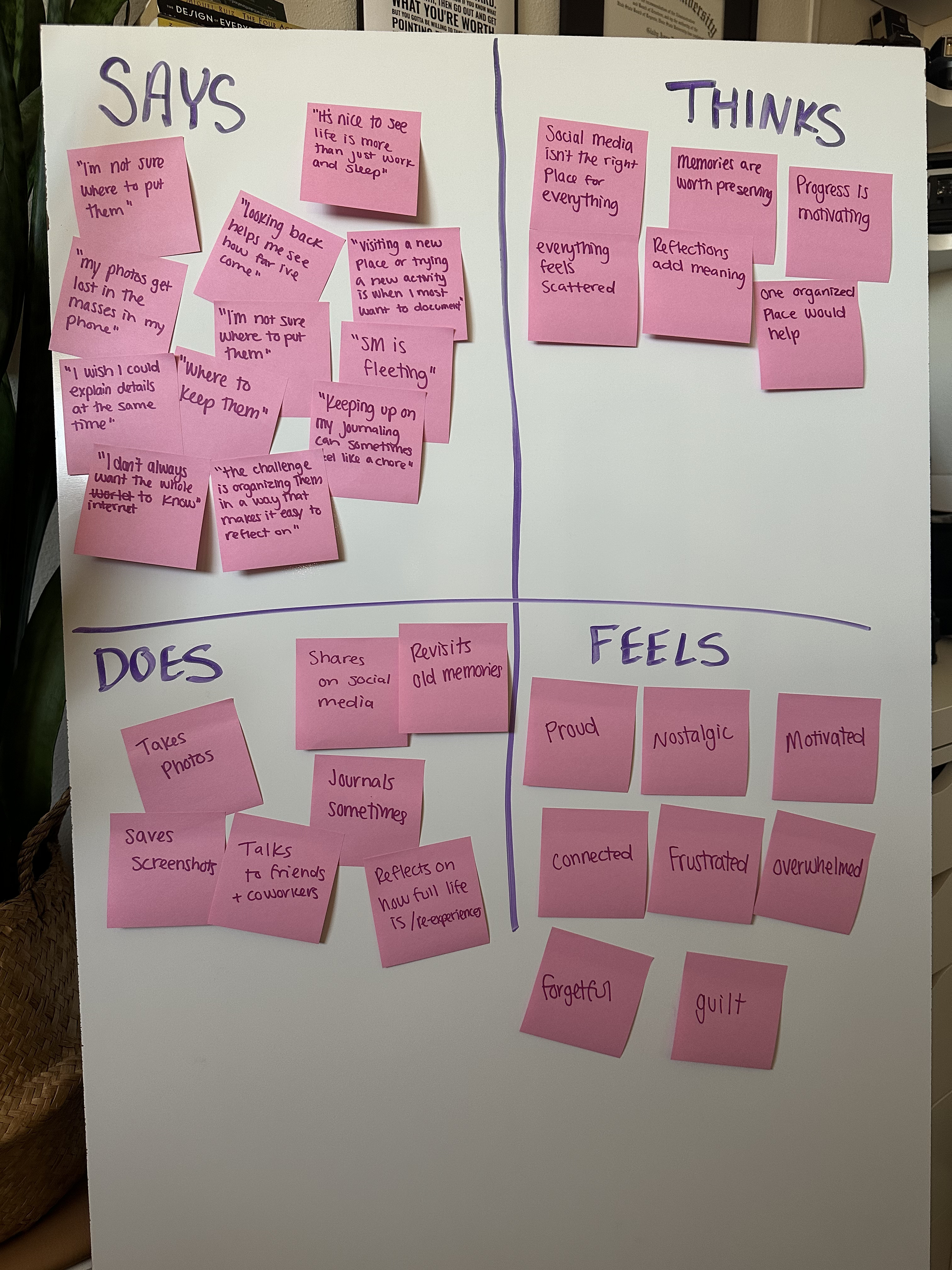
I synthesized the survey responses into an empathy map to identify common behaviors, motivations, frustrations, and emotions.
Meet Alex
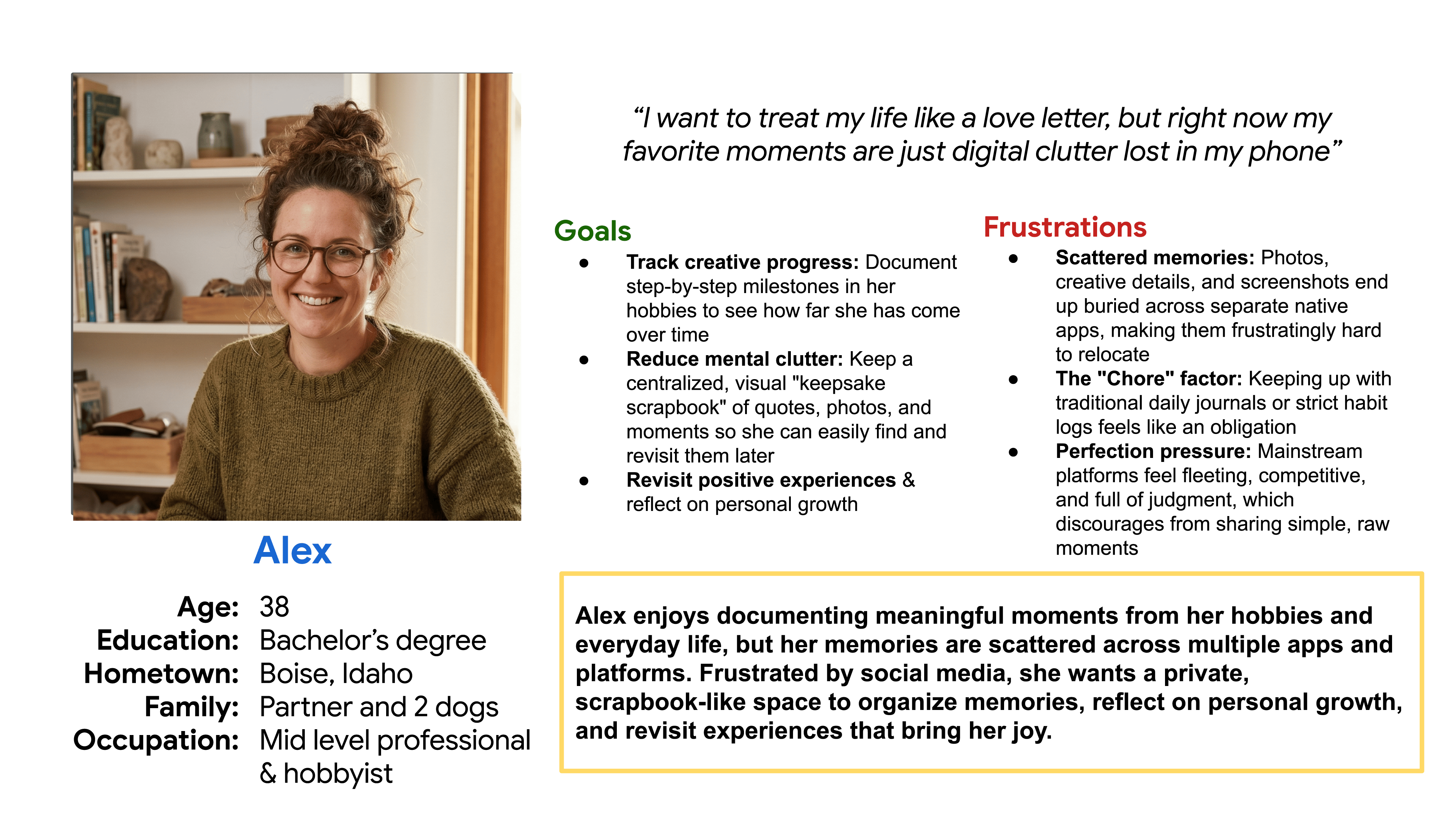
The research was synthesized into Alex, a representative user who enjoys exploring creative hobbies and wants an easier way to document and revisit her experiences.
Mapping the Experience
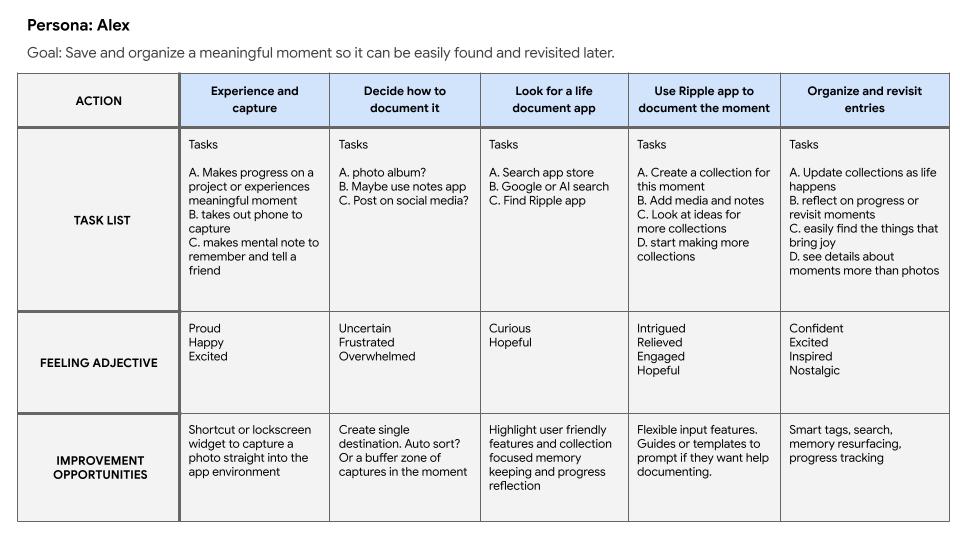
Mapping Alex’s journey helped identify the moments of friction and opportunity when documenting, organizing, and revisiting meaningful experiences.
Journey Map
User Flow
Storyboards
04 // THE DESIGN
Starting the Design
From Insights to Ideas
The research helped translate broad user needs into a focused design direction. I defined the problem, established a hypothesis and goal, then used How Might We questions and ideation exercises to explore possible solutions.
Exploring the Interface
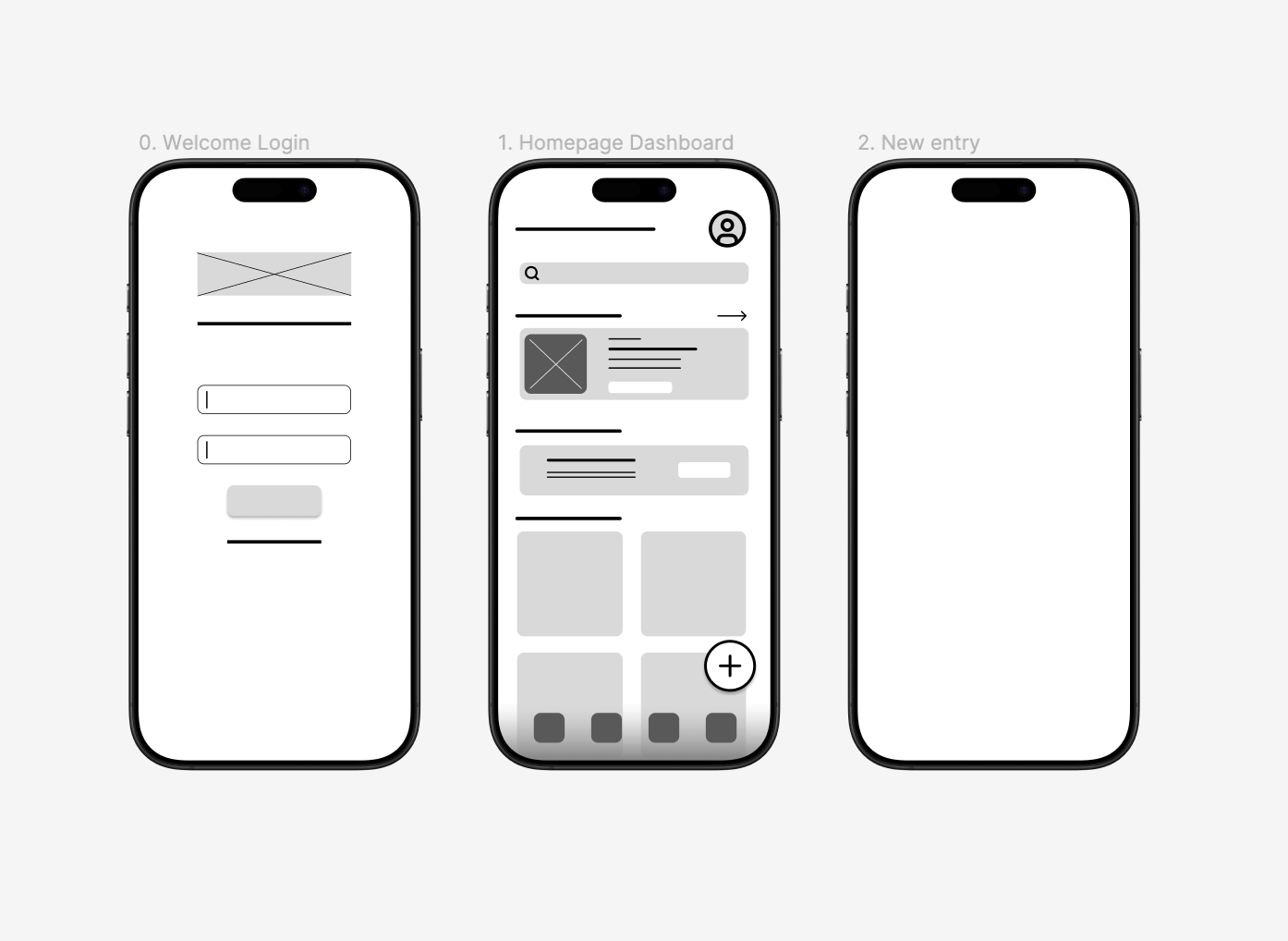
Project Reflection
Ripple is an ongoing concept project that has given me the opportunity to explore a research-driven approach to designing around personal interests and meaningful experiences. So far, the process has helped me better understand how research can shape the structure and direction of a product before moving into higher-fidelity design. As the project continues, I plan to further explore how Ripple can make documenting, revisiting, and connecting with what matters to people feel natural and rewarding.


Ripple
Making hobby documentation more meaningful. Concept project.
Project Overview
Project BriefDesign a mobile app that helps people document, organize, and revisit their hobbies.
Timeline
June 2026 - present
Role
UX Researcher & Designer
Approach
Research, synthesis, and UX design
01 // THE CONTEXT
Understanding the Problem & Defining the Vision
Ripple is an ongoing concept project exploring how people can document, revisit, and reflect on the hobbies that bring meaning to their everyday lives.
The Core Problem
People have countless interests, hobbies, and personal projects, but the things they want to remember, track, and build on are often scattered across different places. I wanted to explore how people currently document what matters to them, what they choose to keep track of, and whether a more centralized experience could make documentation easier to maintain and revisit.
The Goal
Ripple aims to help people feel more connected to what matters to them by creating a low-friction way to document, revisit, and share their hobbies and interests.
The Vision
I envisioned a personalized space where each interest could grow over time, giving people a place to collect multimedia entries, notes, ideas, progress, and memories in ways that make sense for them.
02 // THE RESEARCH
Exploring the Problem Space
Preliminary research and competitive analysis helped uncover how people currently document their hobbies and where existing tools leave room for improvement.
Preliminary Survey
An anonymous survey of seven participants explored how people document meaningful moments and hobbies, what motivates them to save those experiences, and what makes it difficult to maintain those records over time.
01
Documentation is valuable, but scattered.
Meaningful moments are already being captured, but across disconnected apps and platforms, making them difficult to organize and revisit.
02
Looking back gives documentation meaning.
Revisiting memories and progress creates opportunities for reflection, motivation, and connection to what matters.
03
Documentation should feel personal, not obligatory.
People want a low-pressure space to capture meaningful experiences without the structure of a traditional journal or the pressure of social media.
Competitive Audit
Comparing existing tools to identify patterns and opportunities.
01
Hobbies aren't the focus.
Existing tools support journaling, memory keeping, productivity, or habit tracking, but none are specifically designed around hobbies and personal interests.
02
Documentation is organized by when, not by what.
Most competitors rely on chronological entries, leaving an opportunity to organize experiences around individual interests and collections.
03
There's room for structure without complexity.
Existing tools tend to favor either predefined tracking or open-ended customization, creating an opportunity for guided documentation without requiring users to build their own system.
03 // THE USER
Understanding the User
Synthesizing the Research
I synthesized the survey responses into an empathy map to identify common behaviors, motivations, frustrations, and emotions.
Meet Alex
The research was synthesized into Alex, a representative user who enjoys exploring creative hobbies and wants an easier way to document and revisit her experiences.
Mapping the Experience
Mapping Alex’s journey helped identify the moments of friction and opportunity when documenting, organizing, and revisiting meaningful experiences.
Journey Map
User Flow
Storyboards
04 // THE DESIGN
Starting the Design
From Insights to Ideas
The research helped translate broad user needs into a focused design direction. I defined the problem, established a hypothesis and goal, then used How Might We questions and ideation exercises to explore possible solutions.
Exploring the Interface
Project Reflection
Ripple is an ongoing concept project that has given me the opportunity to explore a research-driven approach to designing around personal interests and meaningful experiences. So far, the process has helped me better understand how research can shape the structure and direction of a product before moving into higher-fidelity design. As the project continues, I plan to further explore how Ripple can make documenting, revisiting, and connecting with what matters to people feel natural and rewarding.

Ripple
Making hobby documentation more meaningful. Concept project.
Project Overview
Project BriefDesign a mobile app that helps people document, organize, and revisit their hobbies.
Timeline
June 2026 - present
Role
UX Researcher & Designer
Approach
Research, synthesis, and UX design
01 // THE CONTEXT
Understanding the Problem & Defining the Vision
Ripple is an ongoing concept project exploring how people can document, revisit, and reflect on the hobbies that bring meaning to their everyday lives.
The Core Problem
People have countless interests, hobbies, and personal projects, but the things they want to remember, track, and build on are often scattered across different places. I wanted to explore how people currently document what matters to them, what they choose to keep track of, and whether a more centralized experience could make documentation easier to maintain and revisit.
The Goal
Ripple aims to help people feel more connected to what matters to them by creating a low-friction way to document, revisit, and share their hobbies and interests.
The Vision
I envisioned a personalized space where each interest could grow over time, giving people a place to collect multimedia entries, notes, ideas, progress, and memories in ways that make sense for them.
02 // THE RESEARCH
Exploring the Problem Space
Preliminary research and competitive analysis helped uncover how people currently document their hobbies and where existing tools leave room for improvement.
Preliminary Survey
An anonymous survey of seven participants explored how people document meaningful moments and hobbies, what motivates them to save those experiences, and what makes it difficult to maintain those records over time.
01
Documentation is valuable, but scattered.
Meaningful moments are already being captured, but across disconnected apps and platforms, making them difficult to organize and revisit.
02
Looking back gives documentation meaning.
Revisiting memories and progress creates opportunities for reflection, motivation, and connection to what matters.
03
Documentation should feel personal, not obligatory.
People want a low-pressure space to capture meaningful experiences without the structure of a traditional journal or the pressure of social media.
Competitive Audit
Comparing existing tools to identify patterns and opportunities.
01
Hobbies aren't the focus.
Existing tools support journaling, memory keeping, productivity, or habit tracking, but none are specifically designed around hobbies and personal interests.
02
Documentation is organized by when, not by what.
Most competitors rely on chronological entries, leaving an opportunity to organize experiences around individual interests and collections.
03
There's room for structure without complexity.
Existing tools tend to favor either predefined tracking or open-ended customization, creating an opportunity for guided documentation without requiring users to build their own system.
03 // THE USER
Understanding the User
Synthesizing the Research
I synthesized the survey responses into an empathy map to identify common behaviors, motivations, frustrations, and emotions.
Meet Alex
The research was synthesized into Alex, a representative user who enjoys exploring creative hobbies and wants an easier way to document and revisit her experiences.
Mapping the Experience
Mapping Alex’s journey helped identify the moments of friction and opportunity when documenting, organizing, and revisiting meaningful experiences.
Journey Map
User Flow
Storyboards
04 // THE DESIGN
Starting the Design
From Insights to Ideas
The research helped translate broad user needs into a focused design direction. I defined the problem, established a hypothesis and goal, then used How Might We questions and ideation exercises to explore possible solutions.
Exploring the Interface
Project Reflection
Ripple is an ongoing concept project that has given me the opportunity to explore a research-driven approach to designing around personal interests and meaningful experiences. So far, the process has helped me better understand how research can shape the structure and direction of a product before moving into higher-fidelity design. As the project continues, I plan to further explore how Ripple can make documenting, revisiting, and connecting with what matters to people feel natural and rewarding.